


Clinical studiesFrom algorithm development through intended-use validation.
See disease through biology.
We decode the biological signals driving disease using AI, starting with coronary artery disease.

ISO 13485
ISO 27001
- Universitätsspital Basel
- Maastricht UMC+
- Dedalus

The biology is already in the blood
Coronary artery disease leaves measurable traces in routine clinical chemistry. Cardio Explorer® reads those biological signals and translates them into an individualised likelihood of obstructive disease.
- Individualised, sex-specific pre-test probability from routine blood chemistry
- No new tests or sampling: signals extracted from data already captured
- Validated against invasive coronary angiography across European cohorts
More than a decade of peer-reviewed evidence
A continuous research program: from the foundational diagnostic algorithm to independent validation across Europe and a prospective implementation study now underway.
CountriesSwitzerland, Germany, and the Netherlands.
>4,500
PatientsAcross retrospective cohorts and ongoing prospective evaluation.
Making coronary artery disease visible earlier
A normal troponin and ECG rule out myocardial infarction. They do not rule out obstructive coronary artery disease. Cardio Explorer® estimates each patient's likelihood of obstructive CAD from routine clinical and laboratory data.
Hidden disease
Routine assessment can exclude an acute myocardial infarction while clinically important coronary artery disease remains undetected. In the ROMICAT II trial, around 1 in 8 chest pain patients with a normal initial troponin and ECG had significant coronary stenosis (≥50%) on CT angiography.1 (source 1)
Made visible
Cardio Explorer® combines routine clinical data and standard blood tests into an individual pre-test probability of obstructive CAD.
Earlier action
A low estimate supports deferring further testing. A high estimate supports referral for CT angiography or functional testing.
- Chest pain: 13.8% with obstructive CAD. Troponin-negative ED patients with chest pain. Source 1.
- Atrial fibrillation: 21.0% with obstructive CAD. Patients undergoing AF ablation work-up. Source 2.
- Heart failure: ≥35.8% with obstructive CAD. Patients admitted with heart failure. Source 3.
- Chest pain: troponin-negative ED patients (normal initial troponin and ECG): Ferencik et al., JACC Cardiovasc Imaging 2015 (ROMICAT II), n = 160, ≥50% stenosis on CCTA, doi:10.1016/j.jcmg.2015.06.016.
- Atrial fibrillation: patients undergoing AF ablation work-up: Herczeg et al., Coron Artery Dis 2023, n = 2,321, ≥50% stenosis on CCTA, doi:10.1097/MCA.0000000000001201.
- Heart failure: patients admitted with HFpEF: Rush et al., JAMA Cardiol 2021, n = 106; 38 of 106 enrolled (51% of those catheterised), doi:10.1001/jamacardio.2021.1825.
Built into the systems your team already uses
Cardio Explorer® runs natively inside Dedalus ORBIS, on routine data already captured — no new tests, no new documentation, no new workflow.
Using a different clinical information system? Contact our team.

Your EMR
Outcomes that matter
Cardio Explorer® is designed to help identify patients with clinically significant coronary artery disease earlier and support more deliberate allocation of cardiovascular resources.
More actionable CAD identified
Surface patients with clinically significant coronary artery disease who may otherwise remain undiagnosed.
Higher-yield coronary pathways
Improve the proportion of patients progressing through advanced imaging and invasive evaluation who have actionable disease.
Better use of scarce cardiovascular resources
Focus specialist time, imaging capacity, and cath-lab utilization where they can create the greatest clinical impact.
Built with the teams who run cardiac care
We believe Cardio Explorer®, Exploris Health's innovative cardiac test, will significantly improve care for patients with suspected coronary artery disease.

Dr. med. Thomas Helms
Chairman of the Board, German Foundation for the Chronically Ill
This is certainly an important step forward and has a big potential for the entire diagnostic process of coronary artery disease.

Prof. Hans-Peter Brunner-La Rocca
Vice Chairman, Department of Cardiology — Head, Heart Failure Clinic, Maastricht University Medical Centre
From data to diagnostic confidence. The Cardio Explorer® unlocks the full potential of available patient data to safely rule out coronary artery disease.

Michael Zellweger, MD
Professor of Cardiology — Head of Cardiac Imaging, Cardiology Department, University Hospital Basel, Switzerland
We believe Cardio Explorer®, Exploris Health's innovative cardiac test, will significantly improve care for patients with suspected coronary artery disease.
Dr. med. Thomas Helms
Chairman of the Board, German Foundation for the Chronically Ill
This is certainly an important step forward and has a big potential for the entire diagnostic process of coronary artery disease.
Prof. Hans-Peter Brunner-La Rocca
Vice Chairman, Department of Cardiology — Head, Heart Failure Clinic, Maastricht University Medical Centre
From data to diagnostic confidence. The Cardio Explorer® unlocks the full potential of available patient data to safely rule out coronary artery disease.
Michael Zellweger, MD
Professor of Cardiology — Head of Cardiac Imaging, Cardiology Department, University Hospital Basel, Switzerland
Latest news & research
Video
Events3 Sep 2026
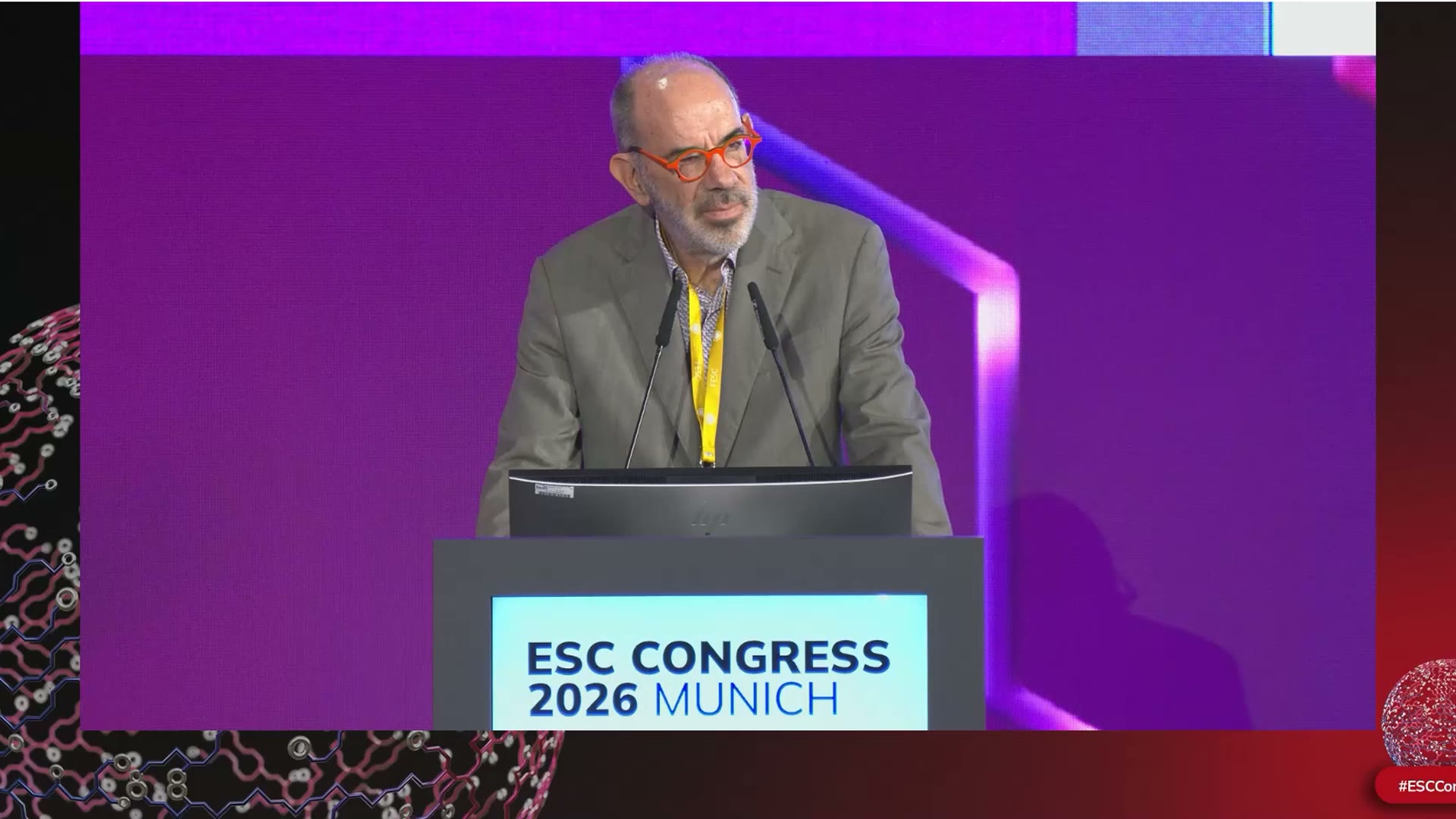
Prof. Hans-Peter Brunner-La Rocca Presents Cardio Explorer® at ESC Munich
Read more

Events28 May 2026
Strategic growth project for the Cardio Explorer® with the GCC
Read more

Events7 May 2026
Exploris Health at the 9th Heidelberg Health Forum
Read more

Events21 Apr 2026
Exploris Health at DMEA 2026 as part of the Swiss Pavilion
Read more

Events29 Jan 2026
eHealth Symposium Southwest: a great start for the Cardio Explorer® in Rhineland-Palatinate
Read more

Events11 Dec 2025
Exploris Health at the DayOne Innovation Showcase, hosted by Roche in Basel
Read more

Events21 Nov 2025
Exploris Health at the ESC Digital & AI Summit Berlin
Read more

Partner18 Nov 2025
Heart health in the EPD — partnership with Post Sanela Health AG
Read more

Bring biological insight into your coronary pathway
See how Cardio Explorer® fits into your existing workflow and where it can improve who reaches invasive evaluation.